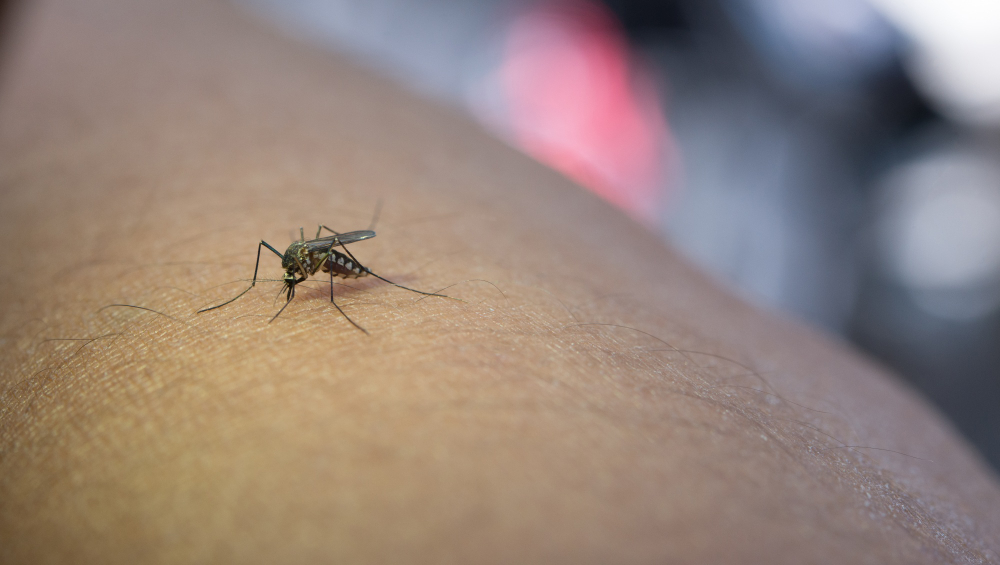
What Keeps Mosquitoes Away? Florida Edition
What keeps mosquitoes away from a Florida yard is not what most homeowners have been told. Our climate gives us a lot to enjoy outside (long warm evenings, patios, pool time, kids in the yard), and mosquitoes make all of it harder. If you have found yourself giving up on the backyard by 6 p.m., cancelling get-togethers, or spraying yourself down with DEET just to check the mail, you are not alone. The good news is that keeping mosquitoes away from a yard here is genuinely possible. The catch is that most of what people try does not really work, while the things that do work look nothing like a hardware store aisle.
What keeps mosquitoes away in a yard is a combination of source reduction (eliminating standing water where they breed), a residual perimeter barrier applied to the vegetation where mosquitoes rest during the day, and larvicide stations that break the mosquito's reproductive cycle. Citronella candles, ultrasonic devices, essential-oil yard sprays, and bug zappers provide little to no measurable protection. Professional mosquito control combines a barrier spray with In2Care stations, treating both adult mosquitoes on the property and preventing the next generation from hatching.
At Avata Pest Control, we have been helping families reclaim their yards from mosquitoes since 2001, and every summer we have the same conversations. A homeowner has bought the candles, tried the ultrasonic device, planted the citronella, and still cannot sit outside without being bitten. The frustration is real. We understand how much it changes daily life to lose your yard during the months you should be enjoying it most.
This guide explains what keeps mosquitoes away in our climate, why most DIY solutions do not do what their packaging suggests, and what professional mosquito control actually does. Whether you decide to handle the problem yourself or bring in help, our goal is that you leave with a clear picture of what works, what does not, and why.
What Keeps Mosquitoes Away? The Short Answer
What keeps mosquitoes away in any meaningful, lasting way comes down to three things: reducing the places they breed on your property, treating the vegetation where they rest during the day with a residual barrier product, and interrupting their reproductive cycle with larvicide. Anything else (citronella, ultrasonic, bug zappers, oil-based sprays) is either localized, short-lived, or scientifically unsupported.
The reason is biology. Female mosquitoes lay eggs in standing water, sometimes in quantities as small as a bottle cap. The eggs hatch, the larvae develop in the water, and within a week or two you have a new generation of adults. If nothing has been done to break that cycle, the population never really goes down, no matter how much you spray yourself with repellent. Adult mosquitoes rest in shaded vegetation during the day (shrubs, tall grass, the underside of leaves) and come out to bite in the low light of dawn and dusk. Treating that resting habitat with a residual product is what actually reduces the number of mosquitoes ready to bite you at 7 p.m.
Effective mosquito control, in other words, targets where they breed and where they hide, not just where you happen to be standing when they find you.
Why DIY Mosquito Solutions Rarely Work in Our Climate
Citronella candles produce a weak repellent effect within a very small radius (roughly a foot or two from the candle in still air), and any breeze effectively cancels them. In a yard where mosquitoes are coming from multiple directions and where wind exists, they are largely decorative. The same applies to citronella plants, which release far less oil than the candles do.
Ultrasonic mosquito repellent devices have been tested repeatedly by academic entomology programs and public health researchers, and the consistent finding is that they do not repel mosquitoes at any meaningful level. Female mosquitoes are drawn to their targets by carbon dioxide, body heat, and lactic acid, not by sound. A device emitting high-frequency noise has no effect on how a mosquito behaves.
Bug zappers kill a lot of insects but very few mosquitoes. The blue light attracts moths, beetles, and other flying insects, most of which are beneficial or neutral, while female mosquitoes (the ones that bite) are attracted to something completely different. A 1996 University of Delaware study found that only about 0.13% of insects killed by a residential bug zapper were mosquitoes.
Essential-oil yard sprays work briefly on the exposed area they hit, but they have no residual effect and do not treat the vegetation where mosquitoes rest. By the time you are done spraying, the earliest treated areas have already lost their effect. This is why homeowners report a good hour or two after spraying, then the mosquitoes are back.
The Mosquito Species Making Florida Yards Miserable
Understanding which mosquitoes are biting you helps explain why some yards are worse than others. Two species do most of the residential damage in our region: the yellow fever mosquito and the Asian tiger mosquito. Both are container breeders, meaning they lay eggs in small volumes of standing water rather than in ponds or ditches. That container can be an unused planter, a birdbath, a clogged gutter, a bottle cap, a bromeliad's cup, a folded tarp holding rainwater. Our climate creates thousands of possible breeding sites in a typical residential lot.
Both species are also aggressive daytime biters, which is unusual for mosquitoes. This is why you may be getting bitten at 3 p.m. even though the classic mosquito narrative is dawn and dusk. The Asian tiger mosquito in particular is known for biting through thin clothing and following its target between shaded areas.
In addition to the local species, our humid subtropical climate keeps every mosquito population active nearly year-round. What is a two-month problem in northern states is an eight-to-ten-month problem here. That is why one-time treatments do so little and why real mosquito control looks like an ongoing program rather than an event.
Mosquito control that gives your yard back.
Our technicians combine a residual barrier spray with In2Care stations to treat where mosquitoes rest and break the cycle where they breed. Family- and pet-safe, backed by the Avata Service Guarantee.
Request Mosquito Control →How Professional Mosquito Control Actually Works
Avata's mosquito control combines two proven tools: a residual barrier spray applied to the vegetation where adult mosquitoes rest, and In2Care stations that break the reproductive cycle before the next generation of biters emerges. Neither one alone is as effective as the combination.
The barrier spray targets the shaded areas mosquitoes rest during the day: shrubs, ornamental grasses, tree canopies, the underside of decks, dense ground cover. The product bonds to the plant surface and continues killing adult mosquitoes that land on treated foliage for up to three weeks. This is what produces the noticeable difference within days of the first treatment: fewer adults resting on your property to fly out at dusk.
In2Care stations are the piece that most homeowners have not encountered. Each station contains a small amount of water treated with a growth regulator that female mosquitoes are attracted to. A female laying eggs there picks up the product on her body and carries it to any other water source she visits, spreading the treatment across breeding sites she finds throughout the yard. Any larvae in those sites are prevented from maturing. The station itself also disperses spores of a fungus that shortens the female's lifespan. It is a genuinely elegant approach, and it works. Our technicians install stations at strategic points around your property and service them at every visit.
For families enrolled in our Pest Protection Program, the barrier spray and In2Care stations are maintained on the same schedule that keeps your general pest control current, so the mosquito pressure that never really stops here is always being met. Every service is backed by the Avata Service Guarantee: if mosquito pressure returns between visits, so do we, at no charge.
How to Reduce Mosquitoes Between Treatments
Professional treatment does the heavy lifting, but eliminating breeding sites on your property is the piece homeowners can do themselves that meaningfully helps. Walk the yard weekly and empty anything holding standing water: plant saucers, buckets, unused pots, kids' toys, tarps, wheelbarrows, boats and covered outdoor furniture. Even a bottle cap of standing water is enough to support hundreds of eggs.
Clean gutters at least twice a year. Clogged gutters are one of the most reliable mosquito breeding sites in a yard, and they are invisible from the ground. Repair any pooling drainage issues that leave standing water in the same low spots after rain. If you have a decorative pond or a birdbath, either add mosquito dunks (a natural bacterial larvicide safe for birds, fish, pets, and children) or refresh the water every three days.
Trim overgrown vegetation to reduce the shaded resting habitat mosquitoes prefer. Not everything needs to go, but keeping dense shrubbery pulled back from patios and porches meaningfully changes the mosquito pressure right where you are trying to sit outside. Combined with an ongoing service like Avata's pest control program, these steps produce the durable reduction in mosquito activity that lets families actually enjoy their yards again.
What Keeps Mosquitoes Away: The Bottom Line
What keeps mosquitoes away in our climate is not what most homeowners have been told. Citronella, ultrasonic, bug zappers, and oil-based sprays make little measurable difference. What works is the combination of eliminating breeding sites on the property, treating the vegetation where adult mosquitoes rest with a residual product, and using larvicide to break the reproductive cycle.
Professional mosquito control puts that combination together on a schedule that matches the year-round pressure of a Florida yard. It is not a one-time fix because mosquito pressure here is not a one-time problem, but done consistently it produces the kind of yard where you can host dinner outside, let the kids play until dark, and use the space you are paying to live in.
If you have written off your yard this summer because the mosquito pressure has gotten too much, we would be glad to help. Reach out for a free property inspection, and we will walk through what your yard is dealing with and what it will take to give it back to you.
Ready to enjoy your yard again?
We would love to help. Contact Avata for a free inspection of your property, an honest explanation of what is driving the mosquito pressure, and a plan to reduce it. No pressure, just a real answer.
Contact Avata →FAQs
In a yard, the most effective approach is a professional residual barrier spray applied to vegetation where adult mosquitoes rest, combined with larvicide stations like In2Care that break the reproductive cycle. Personal repellents containing DEET, picaridin, or oil of lemon eucalyptus work well on skin but do not treat the yard itself. Citronella candles, ultrasonic devices, and bug zappers do not measurably reduce mosquito populations.
Citronella creates a small, short-range repellent effect in still air, roughly a foot or two from the candle. Any breeze cancels the effect, and it does nothing to reduce the mosquito population on your property. Citronella plants release far less oil than the candles and have no measurable effect. It is best thought of as ambience rather than protection.
A professionally-applied residual barrier spray typically stays effective for about three weeks on treated vegetation, which is why professional mosquito programs are usually scheduled monthly. Rainfall and irrigation gradually reduce effectiveness, but the products we use are designed to bond to plant surfaces and continue killing mosquitoes that land on them until the next scheduled service.
Yes. Family and pet safety is central to how we deliver every Avata service. We use micro-encapsulated barrier products that bond to plant surfaces and dry quickly, and our In2Care stations are designed to be tamper-resistant and placed in areas out of reach of pets and children. Your technician will walk through re-entry timing before treatment and answer any questions.
The first treatment does not eliminate every mosquito immediately because it is targeting where they rest and where they breed rather than every insect in the air at that moment. You typically see a significant reduction within a few days as the resting population dies off and the reproductive cycle is broken. Ongoing service is what maintains the low pressure over the long term.
Mosquito pressure in our region runs from roughly March through November, with the heaviest activity from June through October. Some Avata customers pause their mosquito service during the coldest months and resume in spring, while others keep it active year-round. Our team will help you decide what fits your property and how you use your yard.