Signs of Termites in Florida Homes (And What to Do Next)
Termites in Florida do not wait for warm weather. They feed inside walls, floor joists, and support beams continuously through every month of the year, and the surface of your home typically shows nothing unusual until the damage has been accumulating for a year or more. Knowing what termite activity actually looks like, before it reaches the stage of hollow-sounding wood and sticking doors, is the difference between a manageable treatment and a structural repair bill.
Quick Answer
The most reliable signs of termites in a Florida home are mud tubes running along foundation walls or piers, discarded wings near windows or doors after a swarm, frass (small pellets of digested wood) below wood surfaces, hollow-sounding wood when tapped, and paint that bubbles or peels without a moisture source. Finding any of these warrants a professional inspection. Do not spray consumer products on suspected termite activity, as this can scatter the colony and complicate treatment.
At Avata Pest Control, termite inspections and treatment are among the most consequential services we provide for Central Florida homeowners. Lake County's sandy soils allow subterranean termites to move from ground to structure with less resistance than in clay-heavy soils, and the area's warm temperatures mean colonies feed without seasonal interruption. We have been protecting homes across Clermont, Groveland, Minneola, and the surrounding communities since 2001, and termite pressure here is consistent across virtually every neighborhood regardless of construction year.
The Termite Species That Threaten Florida Homes
Eastern subterranean termites (Reticulitermes flavipes)
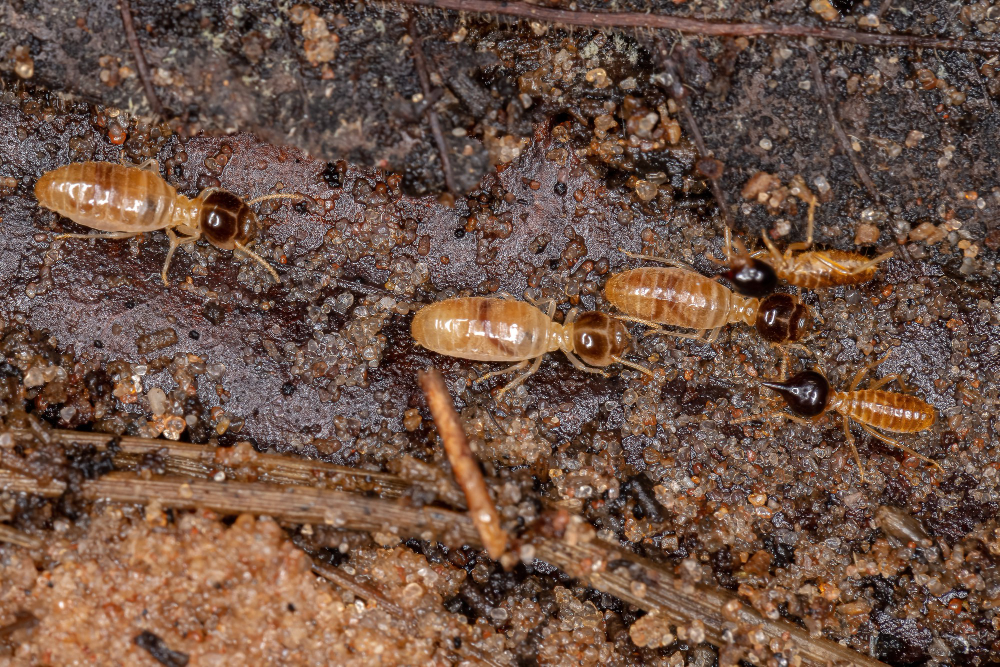
Eastern subterranean termites are the most widespread termite species in Florida and across the eastern United States. Their colonies range from 50,000 to 500,000 individuals, and they require soil contact for moisture, building mud tubes from the ground up to the wood they feed on. They swarm primarily in spring, between February and May in Central Florida, sending out winged reproductives to establish new colonies.
Formosan subterranean termites (Coptotermes formosanus)
Formosan termites are an invasive species concentrated along Florida's Gulf Coast and increasingly present in Central Florida. Their colonies can exceed one million individuals, which is two to twenty times the size of an Eastern subterranean colony, and they consume wood proportionally faster. Formosan colonies also establish secondary reproductive sites inside the structure, making them more difficult to eliminate than Eastern species. They swarm at night in late spring and early summer, typically triggered by warm, humid evenings.
Drywood termites (Incisitermes snyderi and Cryptotermes brevis)
Drywood termites do not require soil contact. They live entirely within the wood they consume, entering through exposed wood surfaces and unfinished joints. They are common in roof rafters, attic framing, door frames, and wooden furniture. Drywood termite infestations produce a distinctive and reliable sign: small pellets of digested wood called frass, which drop from kick-out holes in the wood and accumulate in small piles below the infestation site.
Signs of Termites Every Florida Homeowner Should Know
Mud tubes on foundation walls or piers
Mud tubes are the most reliable indicator of subterranean termite activity. They are pencil-to-thumb-width tunnels built from soil, wood particles, and termite saliva, and they run between the soil and the wood the colony is feeding on. Look for them on exterior foundation walls near the soil line, along the interior foundation of the garage, on piers inside crawl spaces, along plumbing pipes where they enter the structure, and inside utility closets. A mud tube that has been there a while may feel hollow when pressed. Breaking a small section and checking after 48 hours can indicate active use: active termites will repair the break. Seeing a tube does not require immediate panic but does require a professional inspection promptly.
Termite swarmers and discarded wings
Termite swarmers are the winged reproductives that emerge in large numbers to mate and establish new colonies. A swarm event inside the home, with hundreds of small winged insects emerging from a wall, floor, or window frame, is one of the clearest and most urgent signs a homeowner can find. Swarmers are poor fliers and die within minutes. What remains are piles of discarded wings near windows, door frames, and vents. Finding discarded wings inside the home is more urgent than a swarm near the exterior, because interior swarmers indicate the colony is already established within the structure.
Frass from drywood termites
Drywood termite frass looks like fine sawdust or sand and accumulates in small piles on horizontal surfaces below the infestation site. The pellets are elongated, ridged, and roughly the size of a grain of salt. If you find unexplained sawdust-like material on windowsills, furniture, or floor areas below wood trim, examine the wood above for small kick-out holes, which are the openings drywood termites create to push frass out of the gallery.
Hollow-sounding wood
Subterranean termites feed from inside wood outward, leaving a paper-thin outer layer intact as long as possible. Tapping wood that has been fed on produces a hollow sound compared to the solid knock of intact wood. This is useful for checking baseboards, door frames, window sills, and any exposed structural wood in garages or utility areas. A hollow sound alone does not confirm termites, but combined with other indicators it is a meaningful finding.
Paint blistering or peeling without moisture
Termite feeding just below a painted wood surface, combined with the moisture termites carry into the wood, can cause paint to blister, crack, or peel in ways that look like water damage without any obvious moisture source. If paint on baseboards, door frames, or window sills is blistering and there has been no water leak, plumbing issue, or roof problem in that area, termite feeding below the surface is worth investigating.
| Sign | Likely Species | Urgency |
|---|---|---|
| Mud tubes on foundation or interior walls | Subterranean termites | High, schedule inspection promptly |
| Swarmers inside the home | Subterranean or drywood | Very high, colony established inside |
| Discarded wings near windows or vents | Subterranean or drywood | High, swarm event has occurred |
| Frass pellets below wood surfaces | Drywood termites | High, active infestation in wood |
| Hollow-sounding wood when tapped | Subterranean termites likely | Medium, inspect for other signs |
| Paint blistering without moisture source | Subterranean termites | Medium, examine underlying wood |
| Doors or windows suddenly sticking | Subterranean termites | Medium-high, late-stage structural sign |
TERMITE INSPECTION
Found a mud tube, swarmers, or frass? The next step is a professional inspection.
Avata's termite program includes bait stations, liquid soil treatment, and yearly inspections for Clermont and Central Florida homes. Most inspections are scheduled within 24 hours.
Request a Termite Inspection →What to Do When You Find a Termite Sign
The first thing to do is not spray anything. Consumer insect sprays applied to suspected termite activity can scatter a subterranean colony, driving workers deeper into the structure and making the infestation harder to reach with treatment. Termite control requires specific products applied in specific ways to specific locations based on species and extent. A consumer spray eliminates the individuals it contacts and provides nothing toward colony elimination.
Document what you found. A photograph of the mud tube, discarded wings, or frass, including its location in the home, helps the inspection technician understand the scope and locate the entry point more efficiently. Note any other areas where you have seen similar signs, even minor ones. If you found swarmers inside the home, collect a few in a container if possible for species identification.
Contact Avata for an inspection. The inspection includes a full property walkthrough covering accessible foundation areas, the garage perimeter, crawl spaces where applicable, and interior areas where activity has been reported. The technician identifies the species, documents all evidence of feeding and entry, and provides treatment recommendations based specifically on what the inspection finds.
Avata's Termite Protection Options for Clermont Homes
Avata offers three termite treatment approaches, with the recommendation driven by inspection findings rather than a standard package.
Bait stations are placed in the soil around the home's perimeter at regular intervals. The stations contain bait with noviflumuron as the active ingredient, which foraging workers carry back to the colony and distribute to reproductives and additional workers, resulting in colony elimination. Bait stations are monitored at quarterly inspection visits, with consumption levels and station condition documented each time. For homes without active feeding and for properties seeking ongoing colony prevention, bait stations are an effective and less invasive approach.
Liquid termite treatment applies termiticide to the soil around the foundation, under slabs, and around piers. The treatment creates a continuous barrier in the soil that subterranean termites cannot cross without contacting the product. Application involves trenching around the perimeter, drilling through concrete surfaces at 12-inch intervals, and injecting product at regulated rates. Treatment typically carries a multi-year warranty, and Lake County's sandy soil conditions are specifically accounted for in how Avata calibrates product application rates in this area.
Interior foam treatment is used when termites are active in specific wall voids or structural cavities inaccessible from the exterior. Foam expands to fill the cavity and delivers active ingredient throughout the treated area. It is used in combination with perimeter treatment rather than as a standalone approach.
TERMITE PROTECTION
Termite protection in Clermont since 2001. More than 200,000 services performed.
Avata's FPMA-accredited technicians know Central Florida's soil conditions, species patterns, and the construction characteristics that create termite risk in this market. Schedule your inspection today.
Protect Your Home →FAQs
Termite mud tubes are narrow tunnels built from soil, wood particles, and termite saliva, ranging from pencil-width to thumb-width. They are earthy brown in color with a rough, granular texture and run vertically along foundation walls, piers, or plumbing pipes. They are most commonly found on exterior foundation walls near the soil line, inside garages along the wall-floor junction, on piers inside crawl spaces, and along utility pipes where they enter the structure. Breaking a small section and checking 48 hours later for repair activity indicates whether the tube is currently in use.
Interior termite swarmers indicate a colony is already established inside the structure. Do not spray consumer products on them. Collect a few or photograph them clearly for species identification and photograph the location where they emerged. Contact Avata promptly for an inspection. Interior swarmers are a high-urgency situation because they mean the colony has been developing inside the structure long enough to produce reproductives. Same-day or next-day inspection scheduling is available for interior swarmer situations.
Termite swarmers have straight antennae, two pairs of wings of equal length, and a broad waist with no visible constriction. Flying ants have elbowed antennae, front wings that are noticeably larger than rear wings, and a distinctly pinched waist. Both shed their wings after swarming. Examining the insects before wing shedding is helpful, but if you are uncertain, photograph them and contact Avata. Species identification at the inspection confirms which pest is present.
Significant damage. A colony of 50,000 Eastern subterranean termites can consume a cubic foot of wood in roughly six months. Formosan colonies, which are larger and more aggressive, consume far more. In practical terms, a colony that entered a Clermont home through a foundation crack in one spring may have consumed substantial structural wood before any visible surface sign appears in the following year or two. The cost of termite inspection and treatment is substantially lower than the cost of structural repairs that delayed detection produces.
Yes, especially in Central Florida. Termites are most dangerous precisely because they provide no visible signs during the period of active feeding. By the time mud tubes, hollow wood, or sticking doors appear, feeding has typically been ongoing for months or years. Annual termite inspections catch new activity at the mud tube stage, before structural wood is compromised. Homes in Lake County without an active termite protection program are relying on either aging pre-construction treatment or no protection at all.
Avata provides free quotes that include a full property inspection covering accessible foundation areas, the garage, and any areas where you have observed signs of activity. Wood Destroying Organism reports required for real estate transactions are separate formal documents that carry a fee and follow Florida Department of Agriculture regulations. If you need a WDO report for a home sale or purchase, ask specifically about that service when you contact Avata.